
Ride-Alongs Support Mental HealthSubmitted by Chief Deputy Carla Carter, a graduate of FBI National Academy Session 292, and Resilience and Wellness Coordinator Oriana Cozzolino, both of the Thurston County, Washington, Sheriff’s Office Police departments across the country are losing deputies at an alarming rate, largely due to post-traumatic stress disorder (PTSD) and disciplinary matters.1 How can our profession address the roots of PTSD and retain healthy, effective officers and deputies? This is an enormous challenge that has been tackled in myriad ways, but so far, no universal solution has been found. At the Thurston County, Washington, Sheriff’s Office (TCSO), one of our most effective techniques to keep deputies vital and healthy is our in-car mental health program. Reversing Power DynamicsTCSO Resilience and Wellness Coordinator Oriana Cozzolino, a licensed independent clinical social worker (LICSW), is our in-car mental health provider. She was a crime victim advocate for many years and a mediator in our community. Oriana completed her practicum clinic hours at our agency, volunteering over 600 hours. As an LICSW, Oriana comes directly to our deputies during critical incidents to offer debriefs, ride-alongs, training, and one-on-one counseling. She joins deputies on ride-alongs two to three times per month, as requested by a deputy or supervisor or by asking on her own. Deputies request these ride-alongs based on calls they experienced or on a peer’s observation. While accompanying deputies as they patrol the streets may not be standard practice, this efficient approach has been wildly successful. Oriana arrives during a deputy’s shift and is immediately immersed into their environment. Situationally, law enforcement is trained to assume the role of protector in a ride-along scenario, and having her in the vehicle shifts the expected balance of power in the mental health provider-officer relationship. Far from putting the social worker at a disadvantage, creating this reversed dynamic gives both more viability and transactional power. She puts her life on the line to show up for the deputies, and they put their vulnerability on the line to connect with her. Putting Experiences in Context Ride-alongs allow Oriana to experience firsthand the thought patterns of deputies in the environment that created them. As an example, on one ride-along, a call came in, and they were dispatched to a welfare check on an elderly couple with a schizophrenic son. They found the couple stabbed to death. Afterward, the deputy started to play the “what if” game in his head. Our social worker gently challenged the cognitive distortions and replaced them with factual statements about the deputy’s actions in the field, allowing the officer to see the situation through a more realistic lens. Deputies may drive a long distance to their next call for service. This is when they do their best—or worst—thinking. During a particular ride-along, our social worker and the officer she was counseling passed a site where a tragic accident had occurred and several people were killed. The deputy started to talk about his hopelessness and helplessness on that call and how when he drives by there, those emotions often come up for him. Oriana asked him to tell her the story on the way and then again on the way back. They stopped at the location and walked through the scene. Because of this controlled exposure with a trained professional, he reported feeling calmer and more at ease afterward. During a follow-up months later, he reported no longer experiencing the same feelings as he drove by—the site became just another location on the road. Our social worker attributes these interactions and other successful examples to the setting the ride-alongs create. Side-by-side conversation is nonconfrontational and leads to unfiltered thoughts in the environment that created them. Social workers can meet these thoughts with positive intent and no judgement. “One of a deputy’s primary tools is to be able to do their own best thinking. Talking out what they are thinking and why can make a world of difference on a call—or on the next call,” she says. “Microcounseling—even 10-15 minutes at a time while on duty—makes trauma processing easy and readily available to deputies.” Conclusion Stress and trauma are ongoing job hazards, with deputies witnessing an average of three primary trauma events every six months. Having accessible, easily available trauma processing is a necessity. Microcounseling—even 10-15 minutes at a time while on duty—makes trauma processing easy and readily available to deputies. While hour-long in-office sessions with culturally competent clinicians are also always an option, in-car sessions can be less time consuming, less daunting, and more within a deputy’s control. The lasting imprint Oriana has made in her work with our officers has been one of our best investments in our staff. Several deputies report that they would not have remained in the profession if she had not come alongside and helped in the way she is trained to. All law enforcement organizations would benefit greatly from an experienced, culturally sensitive social worker in their agency. Chief Deputy Carter can be reached at [email protected]. Resilience and Wellness Coordinator Cozzolino can be reached at [email protected] Endnotes
1 Jacqueline M. Drew, Elise Sargeant, and Sherri Martin, “Why Do Police Consider Leaving the Profession?: The Interplay Between Job Demand Stress, Burnout, Psychological Distress, and Commitment,” Policing: A Journal of Policy and Practice 18 (2024), https://doi.org/10.1093/police/paae036. 10/12/2020 Cultivate Healing and DignityWhat is Forgiveness?
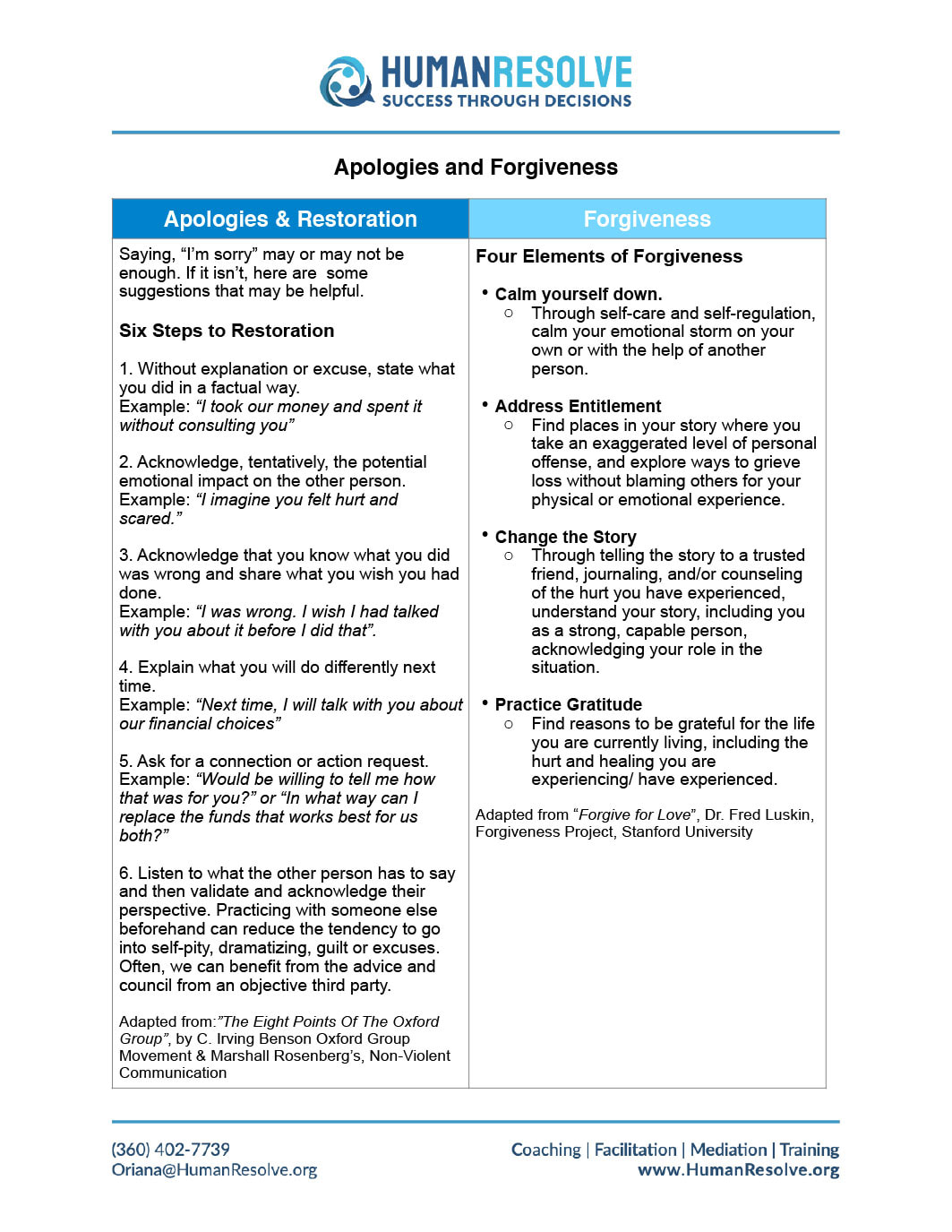
We hurt one another. We cultivate healing and dignity in our relationships, workplaces, and organizations when we acknowledge hurt and make efforts to make things as right as we are able, and then extend forgiveness to another. Forgiveness reduces anger, hurt, depression, and stress and leads to greater feelings of optimism, hope, compassion and self-confidence. Plan for Success Plan how you can forgive and inspire others to forgive by using the guidelines in this worksheet. Want to explore more? Contact me for coaching and training.
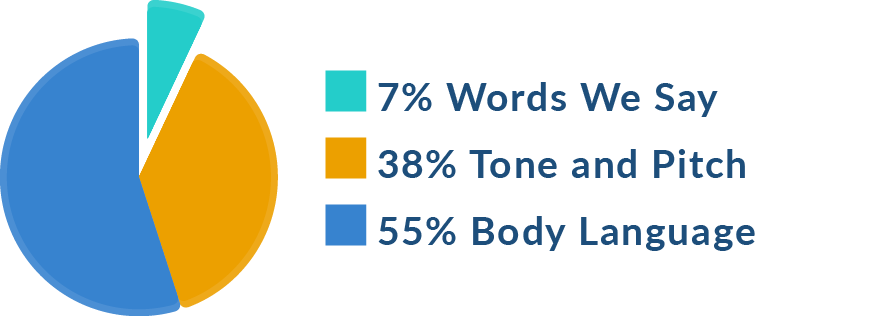
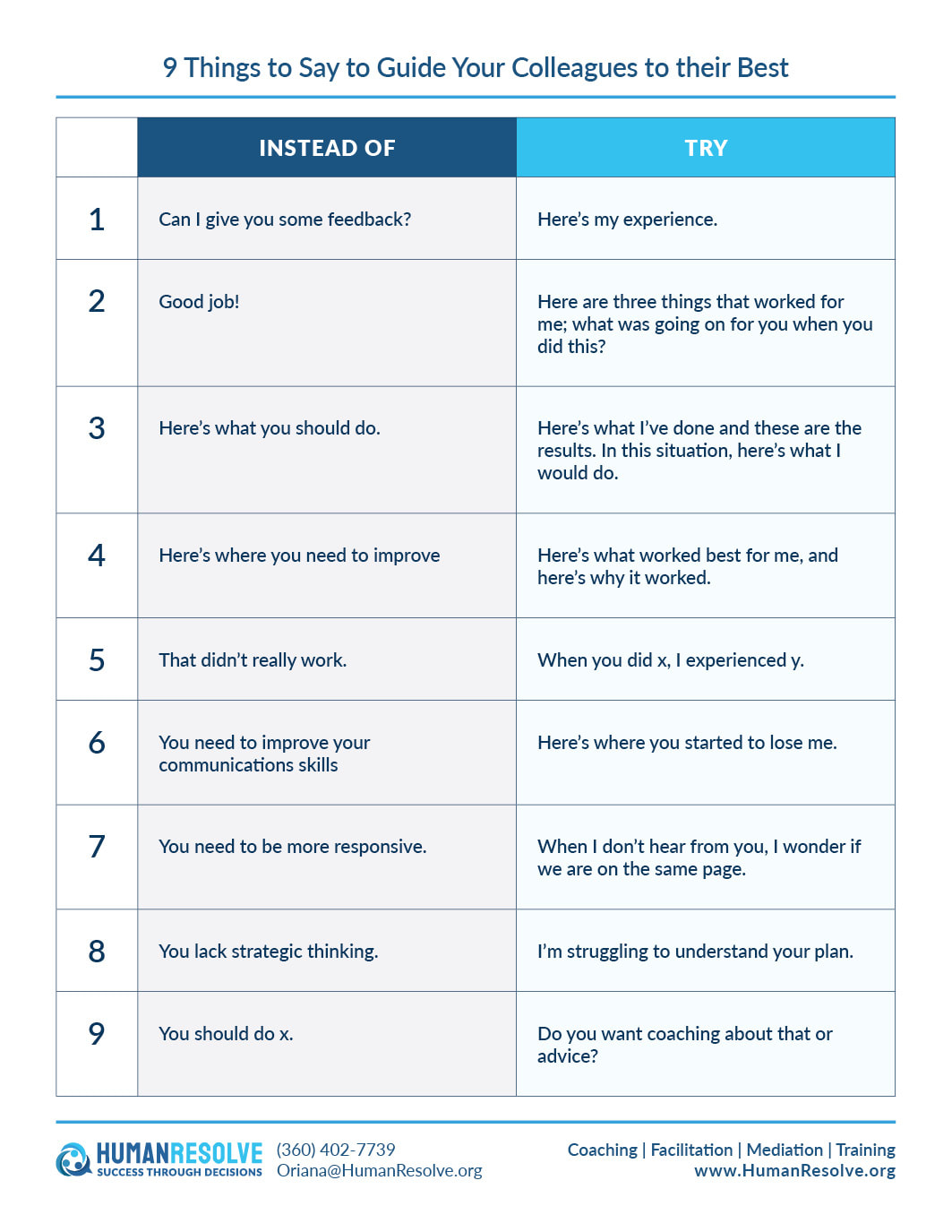
In gratitude, Supportive and Helpful Things to Say However, as one training participant said, "Yes, but surely, words matter." Yes, they do. And, when you are seeking to support your colleagues there are supportive and helpful things you can say. Here are just a few: Want to explore more? Contact me for coaching and training.

In gratitude, 4/20/2020 Human Resolve — Launched!Dear Everyone,

It's my honor to be in community with you! As many of you know, I have provided services through my own business for many years now.
One of my quarantine gifts is to launch HumanResolve.org so that I can connect and support your efforts even more. If you'd like to learn of upcoming events, join my list to stay in the loop and if I can be of support now, just call or email me. Wishing you and yours health and comfort. While these are trying times, I trust that we will be with one another through them. In gratitude, Respect, Purpose, and Exploration
Human Resolve is about leveraging the resiliency, strength, and resources found individually and collectively in groups.
I approach the design process as a collaborative effort while building lasting relationships based on respect, purpose, and exploration. I bring my education, training, and my expertise from 25 years of experience to guide and support you on a journey of discovery. |

Oriana Noël Cozzolino, LSWAIC
Author
Human Resolve is about leveraging the resiliency, strength, and resources found individually and collectively in groups. Archives
February 2025
Categories
|
2/4/2025
0 Comments